Schumer urges Hegseth ouster over deteriorating USS Lincoln conditions amid Iran war
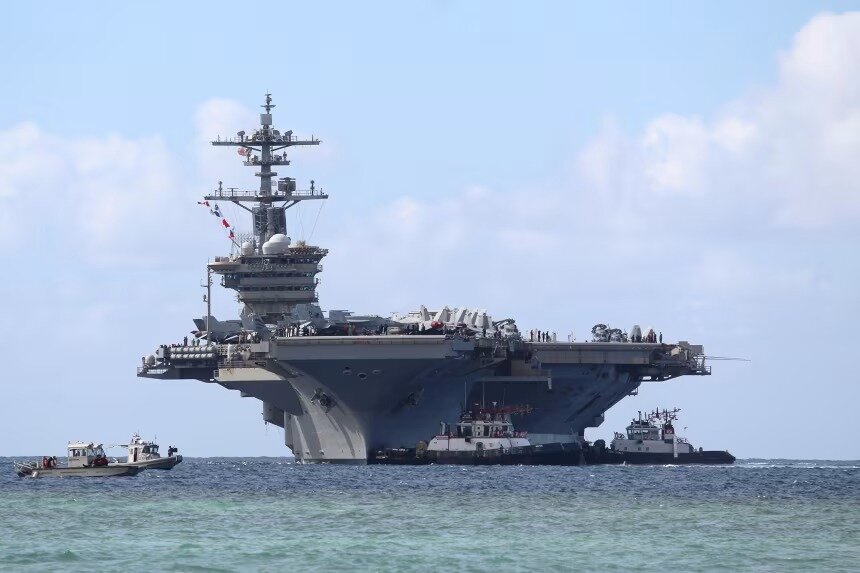
TEHRAN — Floating in the sweltering expanse of the North Arabian Sea, the aircraft carrier USS Abraham Lincoln has spent more than 250 days deployed and over 200 consecutive days at sea without a port call.
Beyond the sheer longevity of its deployment, alarming reports from sailors and family members describe rationed food, broken plumbing, moldy quarters, contaminated water, and severe mental health crises culminating in incidents of crew members attempting to go overboard.
While the Pentagon and military leadership attempt to downplay the crisis as a routine strain of high-tempo operations, the mounting desperation aboard the Lincoln offers a stark window into a far deeper conflict. The hardship faced by 5,000 American service members is not merely a localized administrative failure; it is the physical manifestation of Washington’s strategy of open-ended military confrontation against Iran—a policy that relies on continuous coercive presence while running the human and mechanical engines of American power to the brink of collapse. The political backlash in Washington highlights the growing divide over this relentless operational tempo. Senator Richard Blumenthal, the top Democrat on the Senate Armed Services Committee, recently dispatched a sharp letter to War Secretary Pete Hegseth and acting Navy Secretary Hung Cao. Blumenthal demanded a formal accounting of the ship’s habitability, supply shortages, and mental health metrics, questioning whether the US Navy can sustain the operational demands now being placed on its carrier fleet as the administration repeatedly commits forces to regional conflicts without clear end dates.
The outcry escalated when Senate Minority Leader Chuck Schumer publicly called for Hegseth’s firing, pointing to the horrific shipboard conditions as evidence of broader strategic incompetence. Meanwhile, Senator Ruben Gallego, a combat veteran, urged an immediate bipartisan congressional delegation to investigate conditions on the ship, describing reports of 12- to 16-hour shifts without days off amid broken facilities as both dangerous and unacceptable. What makes the crisis aboard the USS Abraham Lincoln so revealing is how directly it exposes the friction between strategic grandiosity and operational reality.
For decades, Washington has used aircraft carriers as the ultimate symbols of global deterrence—massive, self-contained islands of military supremacy designed to project power into any corner of the globe. However, when carriers are deployed as permanent fixes for unresolved political conflicts, the illusion of limitless capacity begins to break down. Originally assigned to a routine Pacific deployment, the Lincoln was redirected to the Middle East to support expanding combat operations, airstrikes, and blockade enforcement against Iran. As the conflict stretched into its sixth month without a defined strategic exit or legislative authorization, the carrier’s deployment was extended indefinitely. The daily operational environment of a modern supercarrier leaves zero room for error. Launching and recovering high-performance aircraft from a moving flight deck requires extreme precision, intense physical stamina, and rigorous mental acuity. When that environment is degraded by prolonged sleep deprivation, inadequate nutrition, sanitation failures, and months of continuous isolation from shore, the margin of safety shrinks dramatically.
Reports published by military news outlets such as the Navy Times and reported by CBS News detail a crew struggling under intense psychological strain. A confirmed overboard incident in early August, alongside claims from crew relatives regarding suicide attempts, serves as a grim indicator that the physical and mental endurance of service members has been pushed past reasonable boundaries. Despite these alarming indicators, the official response from the Department of War has oscillated between outright denial and bureaucratic minimization. Hegseth publicly dismissed the reports, claiming that conditions aboard the vessel had been "completely misrepresented" and insisting that the Navy provides every crew with everything possible at every moment. Concurrently, US Central Command released social media graphics attempting to label reports of a mental health crisis as false, emphasizing that logistics teams prioritized mission-critical supplies like food and hygiene products amidst disruptions caused by regional combat.
Yet, as covered by The Guardian, this impulse to frame systemic overextension as routine "austere conditions" fails to address the root cause of the problem: a military posture that treats personnel and hardware as expendable components in a foreign policy of endless attrition. This pattern of extended carrier strike group deployments is becoming a feature rather than an exception of American naval posture. As Senator Blumenthal noted in his letter, the Lincoln’s predicament follows similar prolonged deployments for vessels like the USS Gerald R. Ford. When combat operations in the Middle East disrupt standard maintenance cycles and supply lines, the Navy is forced to patch over structural deficits by extending active deployments.
This creates a compounding crisis: deferred maintenance on ships accelerates mechanical wear, while grueling deployment schedules damage crew retention and recruitment, ultimately undermining long-term fleet readiness. Senator Chris Coons captured this paradox by pointing out that while the administration advocates for massive defense spending on high-concept platforms like new battleships or missile defense networks, it simultaneously neglects the basic daily sustenance, maintenance, and well-being required to keep current forces operational. The strategic flaw at the core of US policy toward Iran is the reliance on permanent military pressure as a substitute for coherent diplomacy. By relying on carrier strike groups to project coercive power without articulating achievable political goals, Washington risks entrapping its own forces in an unsustainable war of attrition. Rather than demonstrating decisive strength, maintaining a strike group at sea for over 200 consecutive days exposes structural vulnerability. It signals to regional adversaries that American power projection is strained to its logistical boundaries, reliant on overworking crew members and delaying crucial maintenance to keep a single carrier on station.
The situation aboard the USS Abraham Lincoln illustrates that the costs of an interventionist foreign policy are not abstract concepts confined to policy debates in Washington. They are paid directly by service members enduring rationing, degraded living conditions, and extreme psychological strain in distant waters. As detailed in reports by Anadolu Agency, the lingering question for Pentagon leadership and congressional overseers is whether current operational requirements are generating a long-term readiness crisis across the entire armed forces. As long as Washington treats coercive military presence as a permanent substitute for diplomatic resolution, the toll will continue to mount—eroding from within the very force meant to project American power abroad.
Leave a Comment